
How to Rebuild Trust After Betrayal: 7 Mistakes That Can Slow the Process
Jun 23, 2026Rebuilding a relationship after betrayal is possible, but it is not simple. It can be painful, layered, and much slower than either person wants it to be. When trust has been broken, both people may genuinely want healing and still feel unsure of what rebuilding is supposed to look like.
Whether the betrayal involved infidelity, sexual betrayal, repeated deception, or another significant rupture, rebuilding trust requires more than simply stopping the behavior and deciding to move forward. The impact of betrayal often reaches into a person’s sense of safety, reality, connection, and ability to trust what they are seeing and feeling.
For the betrayed partner, there may be a strong desire to feel safe again while another part remains watchful, uncertain, or afraid of being hurt again. For the betraying partner, there may be urgency to prove change, repair the damage, or move the relationship forward. Those responses make sense, but without awareness they can create patterns that actually slow the healing process.
Rebuilding trust after betrayal happens through consistent honesty, accountability, transparency, respect for boundaries, and repeated experiences of safety over time. The responsibility for repairing the harm caused by betrayal belongs to the person who created that rupture. At the same time, both partners may have their own healing work to do as they move through what happened.
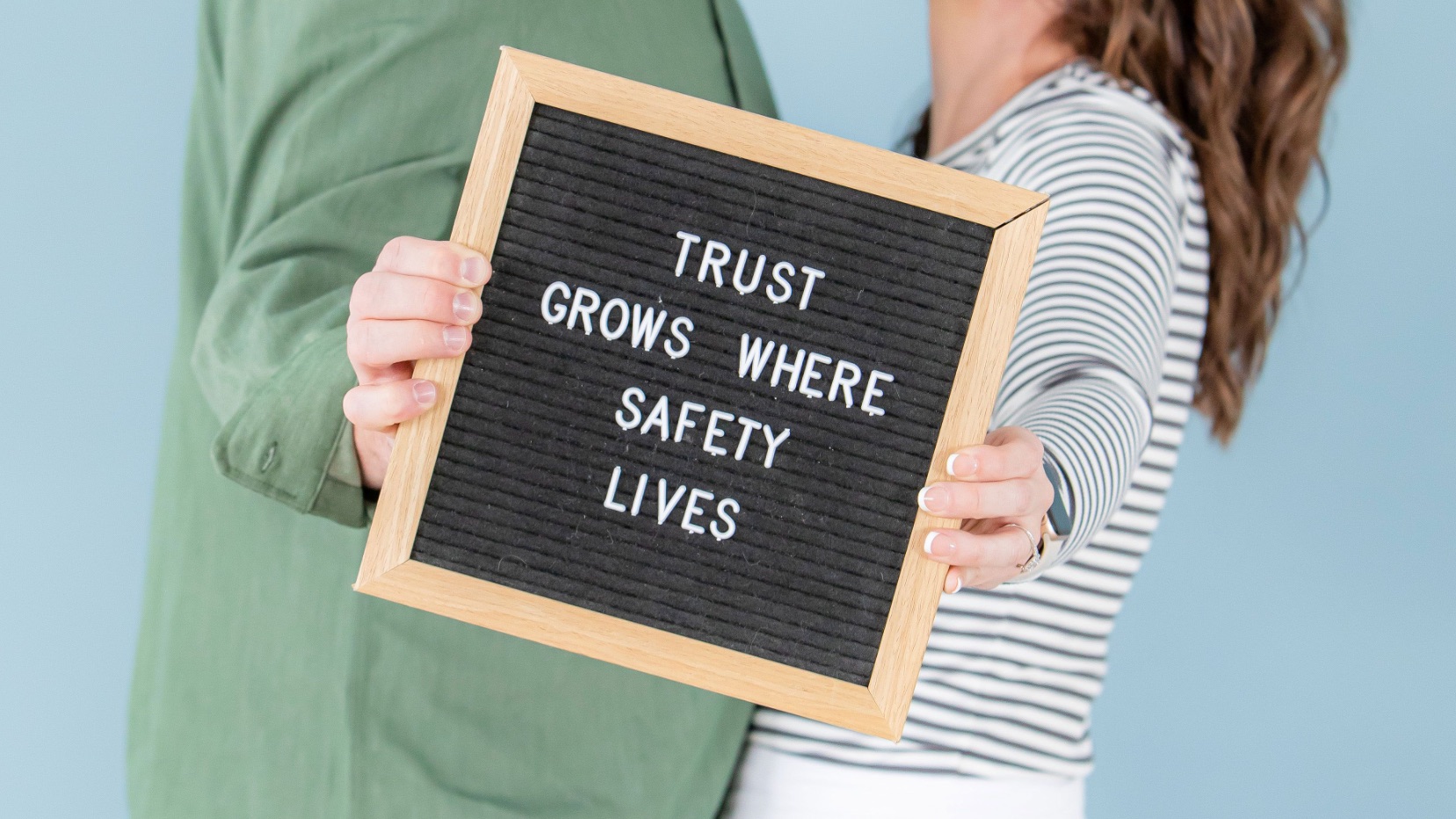
The betrayed partner should not have to force themselves to trust before there is enough consistent evidence that trust is becoming safer. Trust is not rebuilt because someone promises things will be different. It grows through patterns that show, over time, that things actually are different.
And just as important as knowing what helps rebuild trust is recognizing the patterns that can quietly interfere with it.
These mistakes are not shared to shame anyone. Mistakes are part of the process. But when you can recognize what is happening beneath the surface, you have more choice in how you respond and a better chance of creating the kind of safety, honesty, and consistency that rebuilding requires.
Mistake 1: Not Fully Acknowledging the Betrayal
One of the biggest mistakes couples make after betrayal is trying to move forward without fully acknowledging what happened. This can look like minimizing the damage, pretending it was not “that bad,” or rushing to put the past behind you before the pain has actually been faced. For the betraying partner, this may come from shame or fear. For the betrayed partner, it may come from feeling like they have to suppress their emotions in order to keep the peace.
But ignoring betrayal does not make it go away. In fact, it often creates even more pain and distance. True healing begins with fully acknowledging the betrayal and the impact it had on trust, safety, connection, and the betrayed partner’s sense of reality. This goes far beyond saying, “I’m sorry.” Apologies matter, but words without ownership and changed behavior can begin to feel empty.
For the betraying partner, acknowledgment means being willing to face the depth of the pain caused without defensiveness. It means recognizing that trust was not just bruised; for many betrayed partners, it felt completely shattered. It means being willing to hear how deeply the betrayal impacted your partner’s body, mind, emotions, and sense of safety, even when that is incredibly uncomfortable to sit with.
For the betrayed partner, acknowledgment also matters. Sometimes betrayal blindness can make it hard to fully see what happened because seeing it clearly can feel too painful or threatening. The nervous system may try to protect you by minimizing, explaining away, or pushing down the truth. But healing requires being able to let yourself see it, feel it, and process it in a supported way instead of forcing yourself to move on before your body is ready.
Mistake 2: Rushing the Healing Process
After betrayal, it makes sense that both people would want the pain to be over as quickly as possible. The betraying partner may want to prove they have changed so the relationship can go back to normal. The betrayed partner may feel pressure to “get over it,” forgive, trust again, or stop needing so much reassurance. But trust does not rebuild because someone is pushing for it to happen faster.
Healing after betrayal takes time because the wound is not only emotional; it is relational and often deeply embodied. The betrayed partner’s nervous system has learned that someone who was supposed to be safe was not safe in the way they believed. That kind of rupture does not repair through pressure. It repairs through repeated experiences of honesty, consistency, care, and safety over time.
Rushing often backfires because it overwhelms the nervous system. When things move too fast, protective responses come in stronger. The betrayed partner may become more hypervigilant, shut down, reactive, or anxious because their body is sensing pressure instead of safety. The betraying partner may also become discouraged or defensive when healing does not happen on the timeline they hoped for.
Slow is often the new fast in betrayal trauma healing. When you slow down enough to honor the process, you create more space for the body to integrate safety. Trust is rebuilt in small, consistent ways over time. It is not about speed; it is about steadiness.
Mistake 3: Avoiding Hard Conversations
Hard conversations are uncomfortable, and after betrayal they can feel terrifying. Conflict may feel like a threat to the relationship, especially when both people are already carrying pain. It can be tempting to avoid the difficult topics, push things down, or hope the issues will magically disappear if you do not talk about them. But avoiding hard conversations does not remove the pain; it usually just stores it for later.
When pain, resentment, fear, or confusion are pushed under the surface, they often come out sideways. Something small may suddenly feel huge because it is not really about that one moment. It is about all the things that have gone unsaid. The window of tolerance gets smaller, and the relationship begins to carry a constant sense that something is off, even if nobody is saying it out loud.
Hard conversations are necessary because truth is necessary for repair. This does not only mean telling the truth about the betrayal itself. It also means telling the truth about what you feel, what you need, what you are afraid of, and what is happening inside of you. Transparency creates connection, and connection is one of the things betrayal damages most.
These conversations do not have to turn into fights. They require both people to build the capacity to stay present, listen, and speak honestly without attacking, dismissing, or becoming defensive. This is where attunement begins to grow. Instead of fighting against each other, the couple can begin to turn toward the issue together and say, “This is hard, but we are going to face it honestly.”
Mistake 4: Not Setting Clear Boundaries
Boundaries are essential after betrayal because they create clarity and safety. Without boundaries, everything can feel blurry and uncertain. The betrayed partner may not know what is acceptable, what is changing, what will happen if old patterns continue, or what they are allowed to need. That uncertainty can keep the nervous system on high alert.
A healthy boundary is not about control or punishment. It is about protection, clarity, and self-respect. Boundaries say, “Here is what I need in order to feel safe. Here is what I will no longer participate in. Here is what I will do to protect my own well-being if this pattern continues.” They help both people understand what safety requires instead of guessing, walking on eggshells, or relying on vague promises.
For the betraying partner, respecting boundaries is one of the ways trust begins to rebuild. It communicates, “I hear what you need, and I am willing to honor it.” That does not mean every boundary will feel comfortable. In fact, many boundaries will bring up discomfort, fear, shame, or resistance. But respecting boundaries consistently over time can become one of the first signs that real change is happening.
For the betrayed partner, setting boundaries can be incredibly difficult, especially if you have spent years fawning, people-pleasing, or disconnecting from your own needs. You may not even know what you need at first. That is why reconnecting with your body matters so much. Your body often gives you clues about what does and does not feel safe, where something feels off, and where a boundary may be needed.
Mistake 5: Overpromising and Underdelivering
After betrayal, the betraying partner may feel desperate to prove they have changed. In that desperation, it is common to make big promises like, “I’ll never hurt you again,” “I’ll do whatever it takes,” or “Things will be different now.” Those words may be sincere in the moment, but if they are not followed by consistent action, they can create even more damage.
Trust is not rebuilt through grand declarations. It is rebuilt through reliable follow-through. If you say you will be home at six, be home at six or communicate clearly before that changes. If you say you will check in, check in. If you say you are going to be more present, then practice being present even when you are tired, uncomfortable, or unsure what to say.
The small things matter because betrayal often teaches the betrayed partner’s body to watch for inconsistency. A broken promise does not always feel small after betrayal. It can feel like evidence that nothing has really changed. Even something that seems minor to the betraying partner may feel deeply destabilizing to the betrayed partner because their nervous system is trying to determine whether safety is real.
Grand gestures can be meaningful, but they cannot replace steadiness. Trust is built in the droplets. It is the consistent daily evidence that change is real, not just spoken. Love needs action, trust needs proof, and sorry needs change.
Mistake 6: Letting Every Conflict Become About the Betrayal
This mistake can be tender to talk about because the betrayed partner’s pain is real and deserves to be acknowledged. After betrayal, it is common for the hurt to come up again and again. Sometimes it comes up in arguments, moments of insecurity, or moments when the betrayed partner is trying to make sure the pain is not forgotten. Underneath it all, there is often a desperate need to feel safe, seen, chosen, and understood.
The problem is not that the betrayal gets brought up. The betrayal is part of the relationship’s reality and has to be addressed. The problem is when it becomes a weapon instead of a doorway into understanding. When betrayal is used to punish, shame, or win every conflict, both partners can become stuck in the pain rather than moving toward repair.
At the same time, it is important to understand that repeatedly bringing up the betrayal is often a protective response. The betrayed partner may fear that if they stop talking about it, the betraying partner will think everything is fine and stop doing the work. They may fear that if the pain is no longer visible, it will no longer matter. In that way, bringing it up can be the nervous system’s attempt to keep repair from fading into the background.
This is where both partners need compassion and accountability. The betrayed partner can begin to ask, “What does not feel safe right now? What am I needing in this moment?” The betraying partner can practice staying open instead of defensive and ask, “What is this pain asking me to understand? Where can I bring more safety and consistency?” When both people can see the protective need underneath the behavior, the conversation can shift from attack and defense to connection and repair.
Mistake 7: Ignoring Your Own Healing
One of the most common mistakes after betrayal is focusing only on fixing the relationship while neglecting individual healing. The betrayed partner may become consumed with the betraying partner’s recovery, honesty, choices, and growth. The betraying partner may focus only on proving change to save the relationship, without doing the deeper work of understanding the patterns, pain, or wounds that contributed to the betrayal in the first place.
But a relationship cannot fully heal if both people are not also tending to their own healing. The betrayed partner needs space to rebuild self-trust, reconnect with their body, process grief and anger, and remember that their safety cannot depend entirely on another person’s choices. The betraying partner needs to take ownership of their own recovery, patterns, avoidance, addiction, shame, or whatever else contributed to the betrayal. Both people have individual work to do.
This does not mean you cannot work on yourself while staying in the relationship. Relational healing and individual healing often happen together. But it does mean the relationship cannot become the only focus. If all your attention is on fixing the relationship, you may miss the deeper places inside of you that need care, support, and repair.
A quote that beautifully captures this is, “A bird sitting on a tree is never afraid of the branch breaking because its trust is not on the branch, but on its own wings.” After betrayal, it can feel like your entire sense of safety depends on whether the relationship survives. But part of healing is learning to trust your own wings again. It is knowing that even if the branch shakes, even if the relationship is uncertain, you can still stay connected to yourself.
Rebuilding Is About More Than Going Back to Normal
After betrayal, many couples hope to get back to the way things were before. That longing makes sense because betrayal creates so much loss. But often, the goal is not to rebuild the exact same relationship. The goal is to build something more honest, more respectful, more attuned, and more secure than what existed before.
That kind of rebuilding requires both people to keep showing up. It requires truth, boundaries, patience, humility, repair, and a willingness to grow. It requires the betraying partner to become someone who is trustworthy through consistent action, not just words. It requires the betrayed partner to reconnect with their own voice, needs, body, and boundaries.
You will not do this perfectly. There will be setbacks, misunderstandings, ruptures, and moments where old protective patterns come back online. That does not mean healing is impossible. It means you are human, and healing after betrayal is a process.
What matters is not perfection. What matters is awareness, honesty, and a continued willingness to turn toward the work. Rebuilding trust happens slowly, through small consistent choices that say, “I am here. I am telling the truth. I am willing to do the hard thing. I am willing to grow.”
Healing is possible. Rebuilding is possible. And even in the messy, painful middle, you are allowed to take this one steady step at a time.
This post was adapted from our Resiliently Rising Podcast episode on mistakes to avoid while rebuilding trust.
Stay connected with news and updates!
Receive practical tools, nervous system education, podcast episodes, and encouragement delivered straight to your inbox.
We hate SPAM. We will never sell your information, for any reason.
